Matlock owlMatlock
The Shoulder
54
cool-hare-822

Other driver's insurance denied my claim after intersection crash — what evidence actually matters in small claims?

I'm genuinely losing sleep over this and could use some outside perspective from people who've been through something similar.

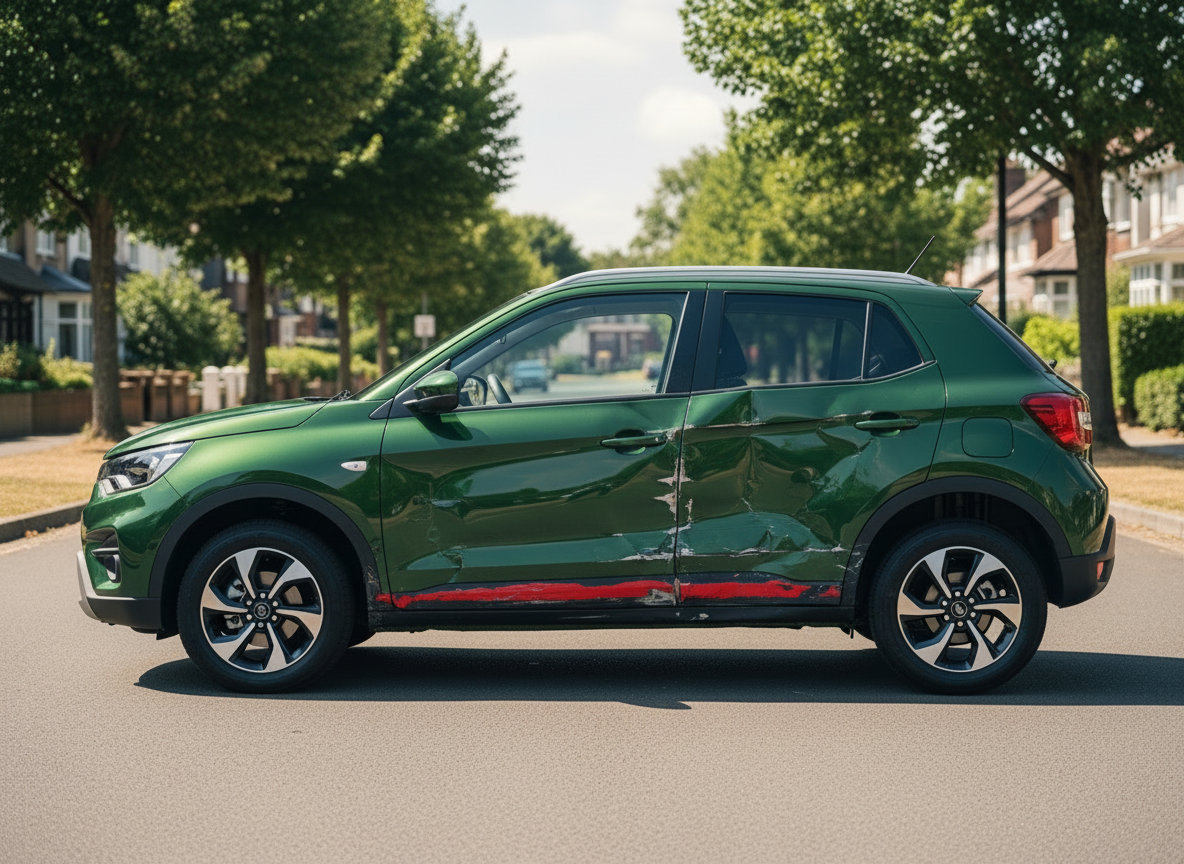
About two months ago I was driving through an intersection on a green light and made a left turn. A driver coming from a cross street hit the front corner of my car. No arrow — just a solid green. I've told the same story to the police and to insurance from day one. The other driver's account kept shifting, which honestly made me more frustrated than anything.

No ticket was issued to either of us. The police report didn't assign fault.

Here's where it gets complicated:

  • I only had liability coverage on my car — I genuinely didn't realize that until after the crash. First accident ever, learned a hard lesson.
  • The other driver's insurance flat-out denied my property damage claim, basically saying a left turn without a green arrow means I was automatically at fault. That reasoning feels wrong to me.
  • My vehicle repair estimate is just under two thousand dollars — not huge, but not nothing either.
  • My mom was in a nearby parking lot and heard the other driver say something at the scene that contradicts what he later told his insurer.
  • I've already submitted a public records request for the signal timing data at that intersection.

I'm strongly considering small claims court but I have no idea what kinds of evidence actually move the needle when there's no dashcam footage and no neutral bystander witness.

Has anyone fought a denial like this and won? What helped your case? I feel like I have a decent story but I don't know how to tell it in a way that a judge will actually believe over the other driver's word.
image

9replies

Not sure what your claim is worth?

AskMatlock can connect you with an independent injury lawyer for a free case check — no pressure, no cost to start.

Check my case

0 / 4000 · posted under a randomly assigned handle

9 replies

  • 14
    cool-seal-572

    Worked claims for years. Here's the honest truth: when there's no clear evidence either way, adjusters often default to the turning driver being at fault because it's a defensible position and most people don't push back. But if you show up in small claims with signal timing records, a corroborating witness statement, and a consistent timeline, that changes the calculus. Judges see through 'he said / she said' stalemates more fairly than insurance companies do.

  • 11
    clever-owl-508

    I don't want to be harsh but I do want to ask — are you 100% sure on the light color? Sometimes in the chaos of a crash people's memory of exactly what the light said gets fuzzy. If you go to small claims and your account has any inconsistencies, the other driver's attorney (if they bring one) will zero in on that. Just make sure your timeline is airtight before you file.

  • 13
    bright-crane-477

    I went through almost exactly this — no dashcam, no witnesses, and the other side's insurance just stonewalling me. What ended up helping me most was getting a written statement from anyone who heard or saw anything at the scene, even if they weren't watching the actual crash. Your mom's recollection of what the other driver said out loud? Write that down in detail NOW before memories fade, and have her write her own separate statement. That kind of admission from the other driver can be really powerful.

  • 8
    patient-dove-427

    The signal timing records you requested are a smart move — seriously, most people don't think of that. If the data shows the light cycle in a way that supports your version of events, that's documentary evidence a judge can actually look at. Also worth pulling: any traffic or red-light cameras in the area (file a records request with the city or county transportation department separately if you haven't). And document every conversation with the insurance company — dates, names, what was said. That paper trail matters.

  • 11
    calm-sparrow-782

    The 'left turn equals automatic fault' line is a classic adjuster move. They're counting on you not knowing your rights or just giving up. Don't. That's not actually how fault law works in most states — it depends on who had the right of way, not just who was turning. The fact that they denied you so quickly tells me they're hoping you'll walk away.

  • 8
    spry-mole-116

    Are you doing okay physically? Sometimes the stress of fighting a claim masks symptoms people brush off at first. If you have any lingering soreness, headaches, or anything that didn't feel right after the crash, please see a doctor and get it documented. Even for a property-damage-focused claim, having medical records showing you took the incident seriously can matter.

  • 10
    bold-swift-043

    Here's what I'd do in your position: (1) Get your mom's statement in writing, signed and dated. (2) Follow up on those signal timing records and keep copies of everything. (3) File in small claims — the filing fee is low and the worst that happens is you lose and you're exactly where you are now. The other driver's story changing is actually something you can highlight to a judge. Consistency matters in court and you have it; they don't.

    • 6
      swift-kestrel-906

      This sounds so stressful, I'm sorry you're dealing with it. You did everything right — you were honest with the police, you followed up, you're doing your homework. Don't let them bully you into dropping it just because the process feels overwhelming.

  • 7
    genuine-badger-577

    Not legal advice, but generally speaking — an unsolicited statement made by the other driver at the scene admitting fault or a different version of events can be introduced as an admission against interest. If your mom heard it clearly and can describe the context, that's worth including in your small claims filing. A lot of people underestimate how much weight judges give to credible witness testimony even from someone who knows the plaintiff. Just make sure her statement is factual and specific, not emotional.